
Ingrown Toenails Treatment in Lakeway & Lake Travis, TX
Ingrown toenails are painful, potentially dangerous if infected, and remarkably simple to resolve with professional care. If you’ve been digging at the corner of your toe at home — stop. At Elite Foot & Ankle Associates near Lake Travis & Lakeway, TX, we treat ingrown toenails quickly and effectively in a single office visit, with permanent prevention options available.
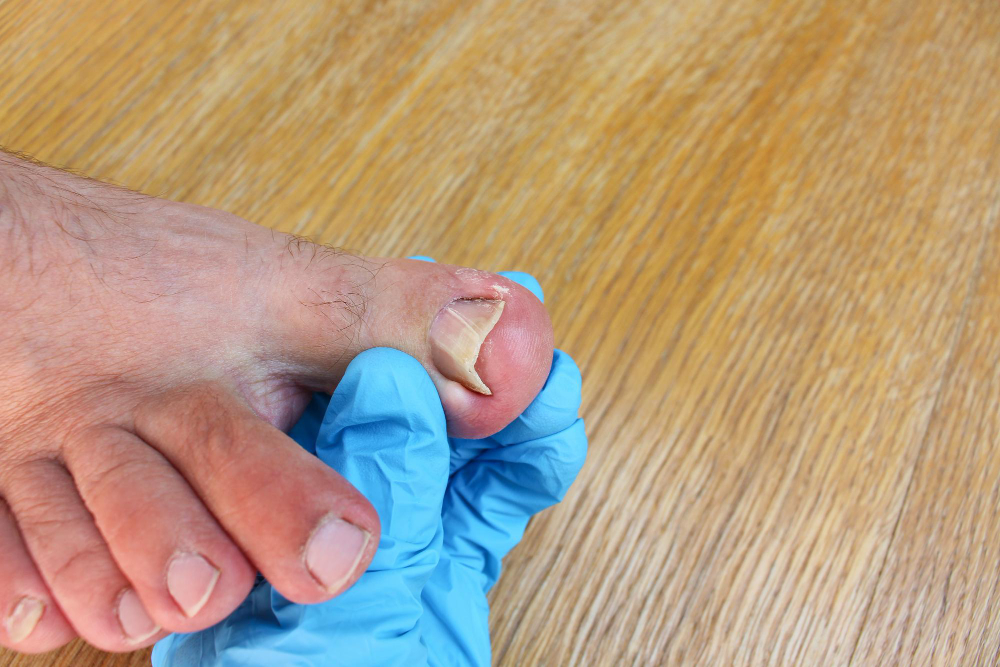
WHAT IS IT?
An ingrown toenail (onychocryptosis) occurs when the edge or corner of a toenail grows into the surrounding skin. The big toe is most commonly affected. The embedded nail causes pain, redness, and swelling — and if bacteria enter through the broken skin, infection (paronychia) develops. Repeated ingrown toenails suggest a structural problem with the nail that warrants definitive treatment.
COMMON CAUSES
- Cutting nails too short or with rounded edges
- Ill-fitting footwear compressing the toes
- Hereditary nail shape (wide, curved, or thick nails)
- Trauma to the toe — stubbing, dropping objects
- Hyperhidrosis (excessive sweating) softening the skin
- Previous nail injury or fungal infection distorting growth
SIGNS & SYMPTOMS
- Pain, tenderness, and soreness along one or both nail edges
- Redness and swelling around the nail
- Skin that appears to be growing over the nail edge
- Drainage, pus, or foul odor (infection)
- Hard, swollen tissue overlying the nail corner
- Pain with footwear or touch
TREATMENT OPTIONS
- Conservative: warm soaks, proper nail technique for mild early cases
- In-office nail edge removal (partial nail avulsion) under local anesthesia — quick and nearly painless
- Phenol chemical matrixectomy: prevents the ingrown edge from regrowing permanently
- Antibiotics when infection is present
- Nail education and proper trimming technique to prevent recurrence
WHY ELITE FOOT & ANKLE?
Ingrown Toenail Relief: What You Can Do at Home
Ingrown toenails happen when the edge of the nail grows into the skin beside it. For mild soreness with no sign of infection, these steps may help for a few days:
- Soak the foot in warm water for 15 to 20 minutes, two or three times a day
- Keep the toe clean and dry between soaks
- Wear open-toed or roomy shoes
Please avoid digging at the nail with scissors or tweezers. “Bathroom surgery” can turn a sore toe into an infected one. If you have diabetes, nerve problems, or poor circulation, skip home care and call us first. MedlinePlus has more information on ingrown toenails.
Signs Ingrown Toenails Need a Podiatrist
See a podiatrist when ingrown toenails do not improve in a few days, or if you notice:
- Increasing pain, redness, or swelling
- Pus or drainage from the side of the nail
- Extra tissue growing over the nail edge
- A nail that keeps coming back ingrown
Removing the problem edge of the nail is a quick in-office procedure. The toe is numbed first, so most people feel only the initial injection. For repeat problems, a treatment to the nail root can stop that edge from growing back. Most patients walk out in their own shoes and return to normal routines soon after.
Stopping Ingrown Toenails From Coming Back
Trim nails straight across rather than rounding the corners, and leave them level with the tip of the toe. Choose shoes with enough room for your toes, and protect your feet during sports. Kids and teens often get ingrown toenails from tight cleats, so check the fit each season. For younger patients, see our pediatric foot care page.
Thick nails from toenail fungus can also press into the skin, so treating the nail itself may be part of the solution. Patients from Lakeway, Bee Cave, and Spicewood can call (512) 907-3100 for fast relief.
FREQUENTLY ASKED QUESTIONS
Mild, early ingrown toenails without infection can sometimes be managed with warm soaks and careful trimming. However, once the nail is deeply embedded, the skin is inflamed, or any sign of infection appears, home treatment is inadequate and risks making things worse. See a podiatrist.
The local anesthesia injection is a brief sting. Once numb, the procedure is painless. After the anesthesia wears off, mild soreness for 1–2 days is typical and managed with over-the-counter pain relief.
After simple nail edge removal, the nail grows back — but the ingrown edge may recur in some patients. After phenol matrixectomy, the treated edge does not grow back, resulting in a slightly narrower nail that looks and functions normally.
Most patients resume normal activities the same day or next day. We recommend keeping the area clean and dry, wearing open-toed shoes for a few days, and following the simple wound care instructions we provide.
Cut nails straight across (not curved at the corners), keep nails at a moderate length, wear properly fitted footwear with adequate toe box width, and address fungal nail infections promptly as they alter nail shape and texture.
SCHEDULE YOUR APPOINTMENT
Don’t live with ingrown toenail pain. Call Elite Foot & Ankle Associates near Lake Travis & Lakeway, TX at (512) 907-3100 — we offer same-day appointments for ingrown toenail treatment. Dr. Souliotis serves Lake Travis & Lakeway, Bee Cave, Westlake, and Austin, TX.