
Plantar Wart Treatment in Lake Travis & Lakeway
WHAT IS IT?
COMMON CAUSES
- Direct contact with HPV on contaminated surfaces
- Walking barefoot in communal areas (pools, gyms, locker rooms)
- Breaks or cuts in the skin of the feet
- Weakened immune system making HPV clearance harder
- Children and teenagers are particularly susceptible
SIGNS & SYMPTOMS
- A hard, thickened patch of skin on the sole of the foot
- Pain when walking or standing, as if stepping on a pebble
- Tiny black dots visible within the wart (clotted blood vessels)
- Disruption of the normal skin lines and fingerprint pattern over the wart
- Multiple small warts clustered together (mosaic pattern)
- Pain when squeezing the wart from the sides rather than direct pressure
TREATMENT OPTIONS
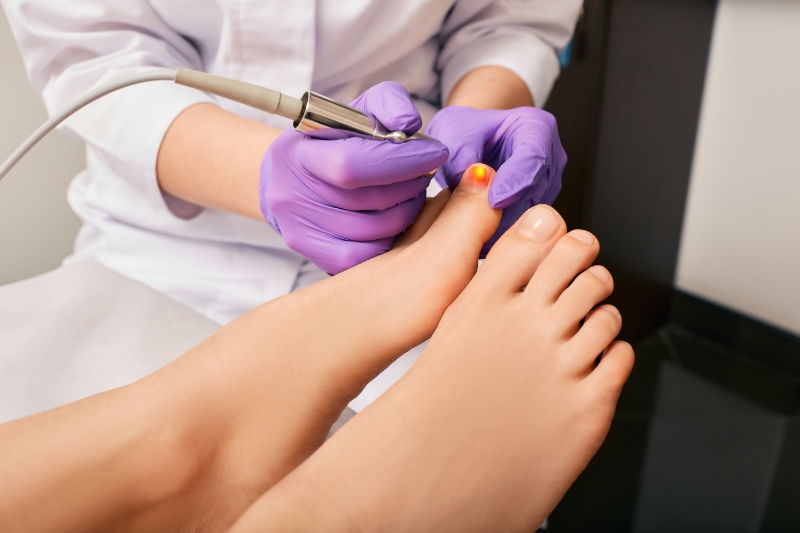
- Swift® Microwave Therapy: 3–4 sessions of targeted microwave energy stimulating systemic immune response — our most effective option
- Topical prescription salicylic acid with professional debridement
- Combination protocols for mosaic or large warts
- Cantharidin (blister beetle extract): applied in-office to destroy wart tissue
- Immunotherapy: stimulating the immune system to attack the virus
- Excision or curettage for resistant warts
WHY ELITE FOOT & ANKLE?
FREQUENTLY ASKED QUESTIONS
SCHEDULE YOUR APPOINTMENT
Plantar Wart Treatment
Plantar warts are small, rough growths that develop on the soles of the feet, caused by the human papillomavirus (HPV). Unlike warts on other parts of the body, plantar warts grow inward due to the pressure of walking and standing, which can make them particularly painful and uncomfortable. They often appear as thickened, hardened skin with tiny black dots in the center, representing small clotted blood vessels. Plantar warts are contagious and can spread through direct contact with contaminated surfaces, such as gym floors, showers, or swimming pools.
Treatment options vary depending on severity and may include over-the-counter remedies like salicylic acid, cryotherapy, laser therapy, or minor surgical removal by a healthcare professional. Preventive measures, such as wearing protective footwear in public areas and maintaining good foot hygiene, can help reduce the risk. Early treatment not only relieves discomfort but also prevents the warts from spreading or worsening.