
Wharton’s Jelly Therapy — Lake Travis, TX
What Is Wharton’s Jelly?
Pediatric sports medicine podiatry addresses foot and ankle injuries in children and adolescents, with specific expertise in growth-related conditions. Growing bones have open growth plates (physes) that are more vulnerable to injury than the surrounding tendons and ligaments. A condition that would cause an ankle sprain in an adult may cause a growth plate fracture in a child.
Our clinic offers Wharton’s Jelly injections as an option for patients with chronic foot and ankle conditions who have exhausted conservative care. The therapy harnesses the unique properties
of perinatal MSCs to jump‐start healing in a way that adult stem cells cannot.
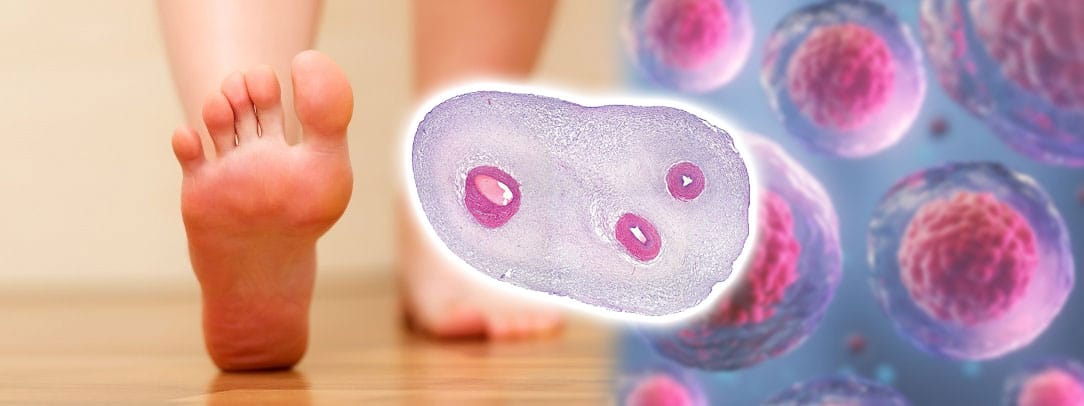
Advantages of Perinatal MSCs
Wharton’s Jelly MSCs proliferate more rapidly and have greater differentiation potential than adult MSCs because they are collected at birth, before age‐related damage occurs. They secrete a wide variety of growth factors, cytokines and extracellular vesicles that modulate immunity,
reduce inflammation and stimulate angiogenesis.
These properties give perinatal MSCs a powerful regenerative profile that supports tissue repair
beyond what autologous stem cells alone can achieve.
Ethics & Tissue Processing
Wharton’s Jelly is obtained from donated umbilical cords after healthy, full‐term births. Donor
mothers undergo extensive screening for infectious diseases and medical history to ensure
safety and ethical sourcing. No harm comes to the mother or baby.
The tissue is processed in FDA‐registered laboratories using sterile techniques. This rigorous
processing preserves cellular integrity and extracellular matrix components while eliminating contaminants, ensuring the product is safe for clinical use.
Conditions Treated
Wharton’s Jelly therapy is being explored for chronic plantar fasciitis, Achilles tendon injuries,
degenerative joint disease, ligament sprains and diabetic foot ulcers. It may also support bone
healing, cartilage regeneration and nerve repair. These indications are of particular interest when
other regenerative therapies have provided incomplete relief.
Because perinatal MSCs deliver a potent cocktail of growth factors and extracellular matrix
components, they may kick‐start healing in tissues that have become stuck in a chronic
inflammatory state.
Clinical Evidence
Clinical research into Wharton’s Jelly is ongoing. A randomized controlled study evaluating a
Wharton’s Jelly‐derived exosome gel for diabetic foot ulcers reported that the treated group
healed in about six weeks versus 20 weeks for the control group, with 62 % of treated patients
achieving complete wound closure. Adverse events were similar between groups, indicating a
favorable safety profile.
While these early results are encouraging, larger studies are needed to establish efficacy across
different musculoskeletal conditions. We present Wharton’s Jelly as part of an evolving treatment
paradigm with promising preliminary data.


Mechanisms of Action
Wharton’s Jelly MSCs and their exosomes modulate immune responses, dampen inflammation
and promote new blood vessel formation. They secrete growth factors such as VEGF and IGF‐1,
along with microRNAs that influence the behavior of surrounding cells.
These biological signals recruit endogenous progenitor cells, encourage angiogenesis and shift
damaged tissues from a chronic inflammatory state into a reparative state. This multifaceted
action helps explain why perinatal MSCs may outperform adult MSCs in certain contexts.y that adult stem cells cannot.
Patient Selection & Safety
Wharton’s Jelly therapy is considered for patients with chronic, treatment‐resistant conditions. We perform a comprehensive evaluation to rule out active infection, uncontrolled diabetes or other contraindications. Individuals should be aware that long‐term outcomes are still being studied and that the therapy remains investigational for many indications.
Adverse reactions are uncommon, but we provide careful monitoring and thorough follow‐up. Our
consent process ensures you understand the risks, benefits and alternatives before proceeding.

Combining with Autologous Stem Cells
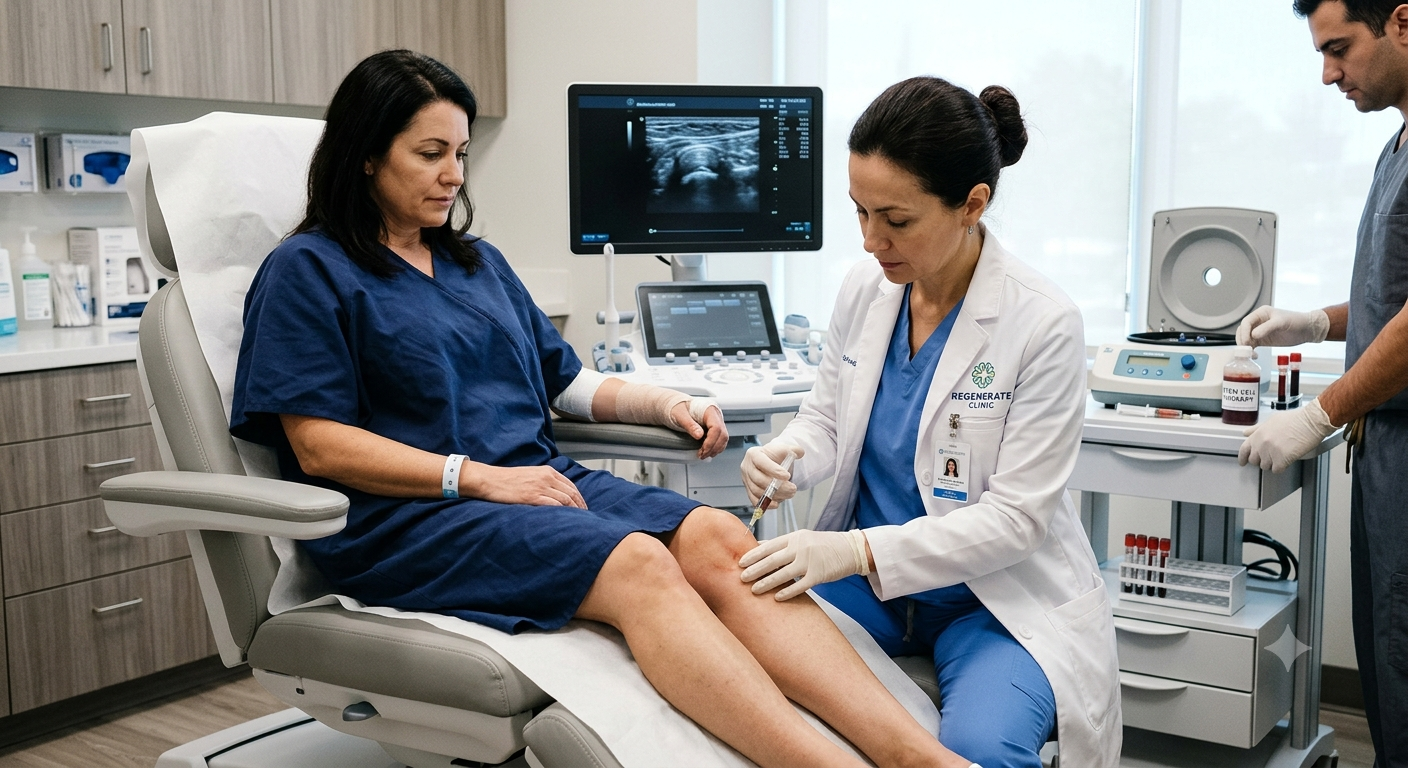
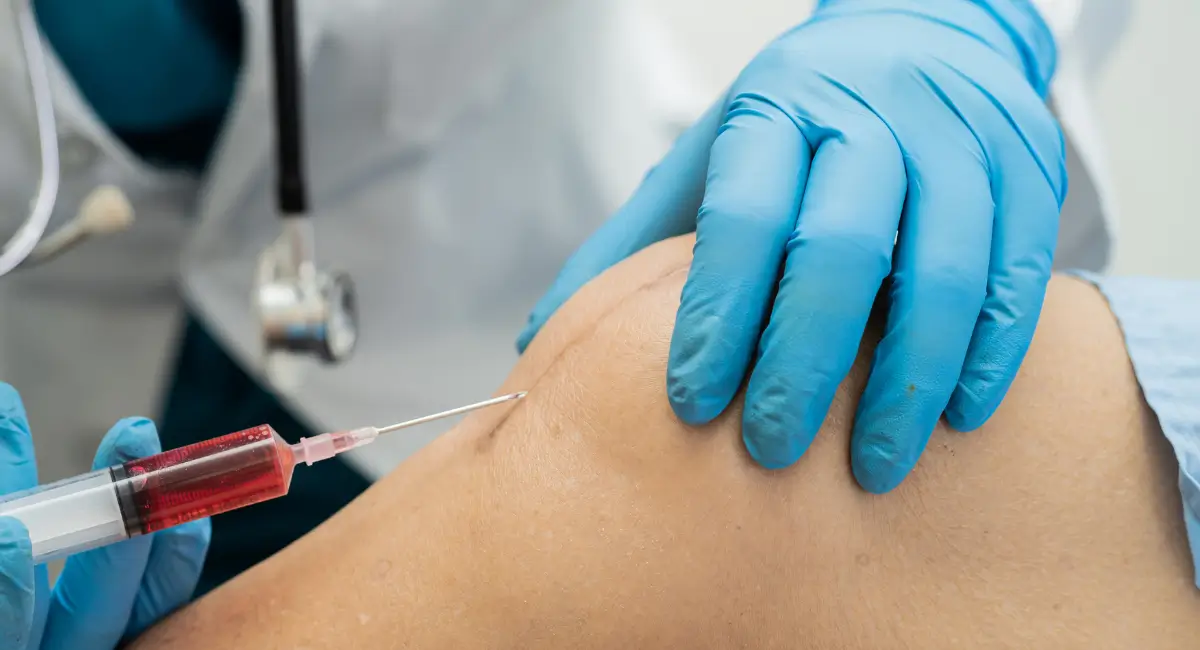
To maximize healing, we may combine Wharton’s Jelly allografts with autologous stem cells
harvested from your bone marrow or adipose tissue. Autologous cells provide a scaffold of
progenitor cells, while the perinatal MSCs offer powerful trophic factors that stimulate repair.
This combination can be especially beneficial for degenerative tendon and ligament injuries or
when previous treatments have failed. Your doctor will determine whether adding autologous
cells is appropriate for your condition.
Role of Shockwave Therapy
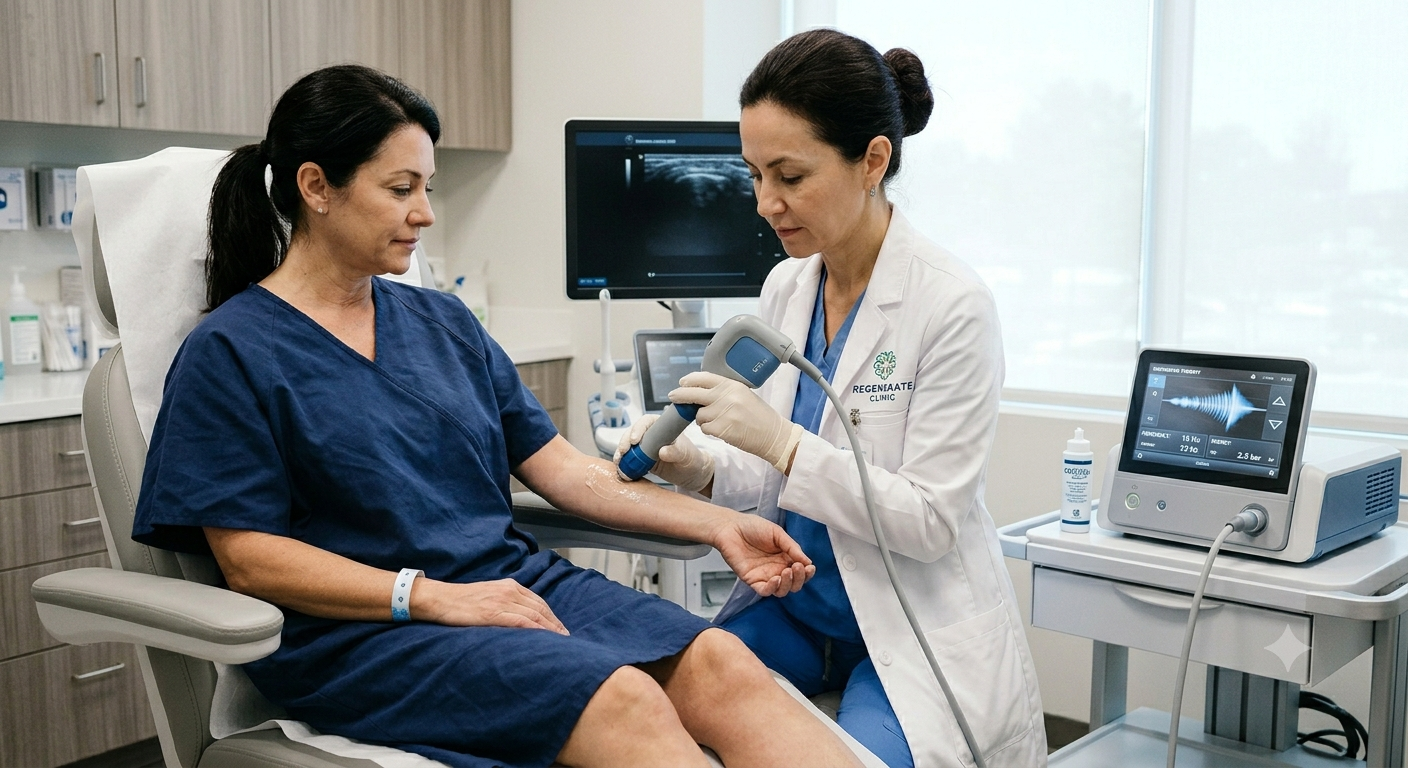
Shockwave therapy can further enhance the effects of Wharton’s Jelly by increasing local blood
flow and stimulating cellular activity. The micro‐trauma generated by shockwaves encourages the
injected cells to engraft and promotes new vessel growth.
Depending on your condition, we may deliver one or more low‐energy shockwave sessions
before or after the injection. Combining mechanical and biological stimulation improves tissue
responsiveness and supports long‐term healing.

Role of Peptide Therapy
Investigational peptides such as BPC‐157 may further enhance collagen synthesis, reduce
inflammation and support nerve regeneration. Although clinical evidence is limited, these
peptides offer another layer of signaling that may complement perinatal MSC therapy.
We discuss the potential benefits and uncertainties of peptide therapy on an individual basis.
When used judiciously, peptides can contribute to a multifaceted regenerative strategy.
Doctor’s Approach & Regulatory Considerations
Dr. Souliotis is a pioneer in regenerative podiatry, integrating Wharton’s Jelly therapy with other
cutting‐edge treatments. She critically evaluates emerging evidence and tailors protocols to each
patient’s needs. Our clinic adheres to strict ethical sourcing and regulatory guidelines to ensure
patient safety.
Wharton’s Jelly products are regulated as human cell and tissue–based products. They are not
FDA‐approved for all indications and are offered as part of an emerging regenerative protocol.
We provide thorough informed consent detailing the investigational status, potential benefits,
risks and alternatives.