
Morton's Neuroma Treatment in Lakeway & Lake Travis, TX
The burning, tingling sensation between your toes — like walking on a marble or a folded sock — is a hallmark sign of Morton’s neuroma. This common nerve condition affects the ball of the foot and can make every step uncomfortable. At Elite Foot & Ankle Associates near Lake Travis & Lakeway, TX, we offer effective conservative and surgical options to eliminate neuroma pain and get you back to wearing shoes you love.
WHAT IS IT?
COMMON CAUSES
- Narrow or tight footwear compressing the forefoot
- High heels concentrating pressure on the ball of the foot
- Biomechanical abnormalities such as flat feet, high arches, or bunions
- Repetitive impact from running or court sports
- Prior foot injuries altering nerve mechanics
SIGNS & SYMPTOMS
- Burning or electric shooting pain between the third and fourth toes
- Sensation of walking on a pebble or bunched-up sock
- Numbness or tingling in the toes
- Pain that worsens with tight shoes or prolonged walking
- Relief when removing shoes and massaging the foot
- Clicking or popping sensation in the forefoot (Mulder's sign)
TREATMENT OPTIONS
- Footwear modification: wider toe box, lower heels
- Metatarsal pads and custom orthotics to offload the nerve
- Corticosteroid injections for significant pain relief
- Alcohol sclerosing injections — a series of injections that shrink the nerve
- MLS® Laser Therapy to reduce nerve inflammation
- Surgical neurectomy: removal of the affected nerve when conservative care fails
WHY ELITE FOOT & ANKLE?
What Causes a Neuroma?
A neuroma is a thickening of the tissue around a nerve. In the foot it usually forms between the third and fourth toes, where a nerve runs under the ball of the foot and can be squeezed by the bones around it. This is known as Morton’s neuroma.
Tight or high-heeled shoes squeeze the toes together and add pressure, which is one reason a neuroma is more common in women. Running, tennis, pickleball, and other sports with repeated pressure on the forefoot can also be triggers. Foot shapes such as bunions, hammertoes, and flat feet may increase the risk.
The American College of Foot and Ankle Surgeons has a clear explanation of this condition.
How We Diagnose a Neuroma
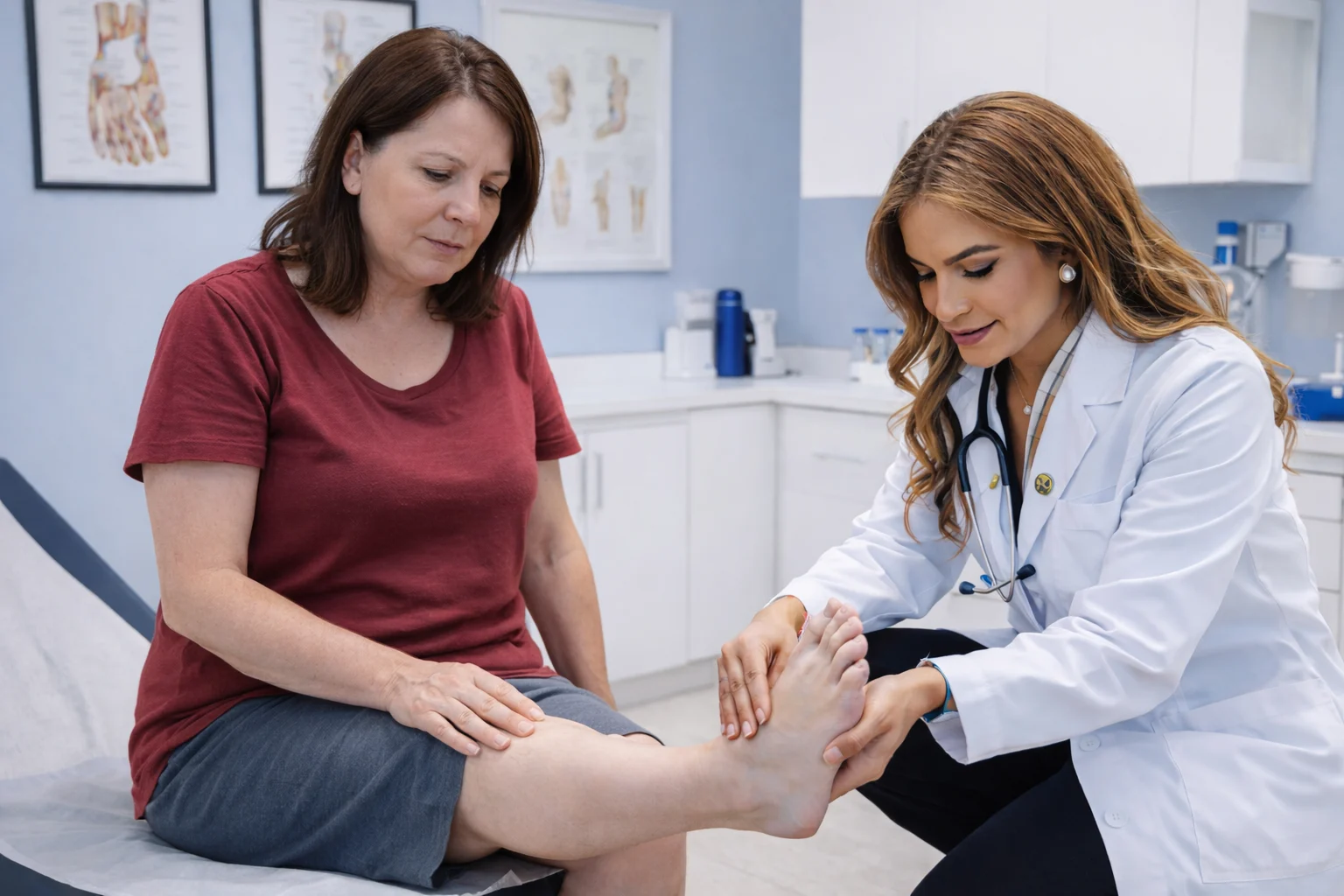
Most of the time a neuroma can be identified from your symptoms and a careful exam. Dr. Souliotis presses between the toes to reproduce the pain and checks for a clicking sensation. X-rays can rule out a stress fracture or arthritis, and ultrasound or MRI may be used when the answer is not clear.
Other problems can feel like a neuroma, including capsulitis under the second toe, a bursitis, or a nerve issue higher in the leg. Treating the right problem starts with the right diagnosis.
Neuroma Care for Lakeway, Bee Cave and Spicewood
Early care is usually simple. Wider shoes, lower heels, a metatarsal pad, and custom foot orthotics can take pressure off the nerve. For many people these changes alone make a big difference. Others may add injections or MLS® laser therapy, and surgery is an option if pain continues.
Tingling or a marble-under-the-foot feeling that keeps returning is worth having checked. Our Spicewood office is a short drive from Lakeway and Bee Cave. Call (512) 907-3100 to schedule a visit.
What Patients Often Tell Us
Many people describe a pebble in the shoe, a sock bunched under the toes, or a sudden zing of electricity into the third and fourth toes. The feeling usually eases when you take off your shoes and rub the ball of your foot, then returns once you walk again. Some days are better than others, which is why many patients wait months before booking a visit.
FREQUENTLY ASKED QUESTIONS
Small neuromas may improve significantly with footwear changes and offloading. However, once a neuroma has enlarged to the point of causing regular symptoms, it rarely resolves without treatment. The good news is that most neuromas respond very well to conservative care.
Corticosteroid injections provide significant relief for most neuroma patients — studies show improvement in 60–80% of cases. A series of 2–3 injections spaced several weeks apart is typical. Ultrasound guidance improves accuracy and outcomes.
Alcohol sclerosing injections deliver a series of dilute alcohol injections (typically 4–7 sessions) directly into the neuroma, gradually shrinking the nerve tissue. This is a well-established alternative to surgery with good success rates (70–80%) for appropriate candidates.
Surgery (neurectomy — removal of the affected nerve segment) is recommended after conservative care including injections has failed to provide adequate relief. It has high success rates (80–90%) but does result in permanent numbness between the affected toes.
True recurrence is uncommon after neurectomy. However, a 'stump neuroma' — a small, painful re-growth at the nerve end — can occur in a minority of cases and may require additional treatment.
SCHEDULE YOUR APPOINTMENT
Ball-of-foot pain ruining your daily life? Call Elite Foot & Ankle Associates near Lake Travis & Lakeway, TX, at (512) 907-3100 or book your appointment online. Dr. Souliotis serves Lake Travis & Lakeway, Bee Cave, Westlake, and Austin, TX.
Visit Us
Our goal is for you to leave our office with a memorable and enjoyable experience, which is why our welcoming and compassionate staff will do everything they can to make you feel right at home.
4900 Bee Creek Rd Building 2 Suite 203, Spicewood, TX 78669, United States
Phone: +1 (512) 907-3100 Fax: +1 (512) 907-3111