
Bunions & Hammertoes Treatment in Lakeway & Lake Travis, TX
Bunions and hammertoes are among the most common structural foot deformities — and among the most undertreated. Many patients live with pain and embarrassment for years, not realizing that effective, minimally invasive solutions exist. At Elite Foot & Ankle Associates near Lake Travis & Lakeway, TX, we offer the full spectrum of care, including Lapiplasty® 3D bunion correction, so you can wear shoes comfortably and walk without pain.
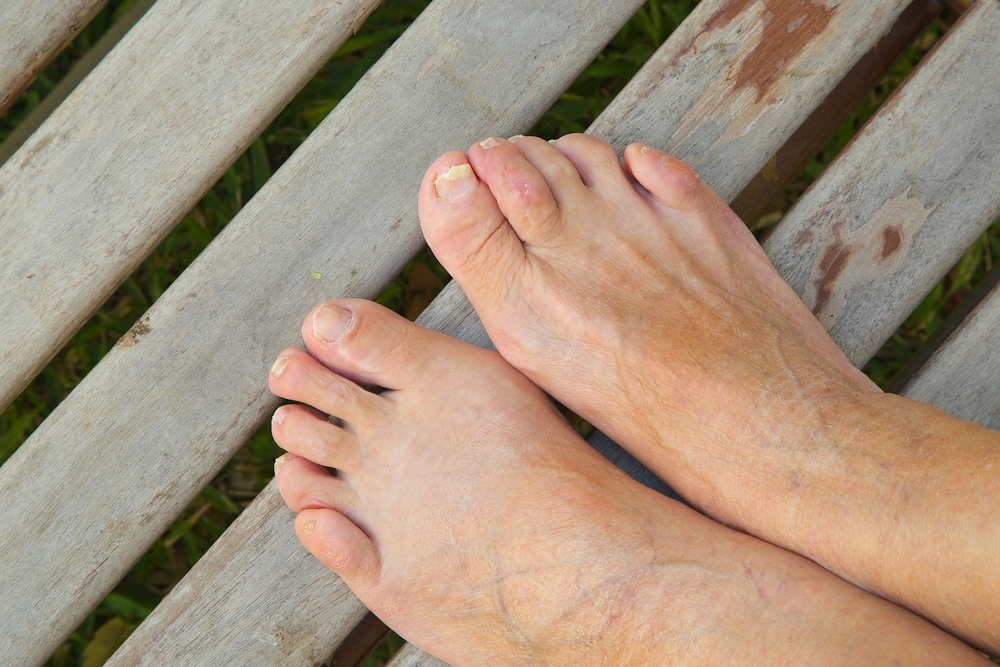
WHAT IS IT?
COMMON CAUSES
- Inherited foot structure that predisposes to misalignment
- Ill-fitting footwear, especially narrow-toed or high-heeled shoes
- Flat feet or abnormal gait mechanics
- Arthritis causing joint deterioration
- Neuromuscular conditions affecting muscle balance
- Prior foot injuries
SIGNS & SYMPTOMS
- A visible bony bump on the side of the foot at the big toe joint
- Redness, swelling, and soreness around the big toe joint
- Toe pointing inward toward or overlapping other toes
- Persistent or intermittent pain when walking or wearing shoes
- Bent, rigid, or painful smaller toes
- Calluses or corns on toes where they rub against shoes
- Restricted motion in the big toe
TREATMENT OPTIONS
- Conservative: wide toe-box footwear, custom orthotics, padding, anti-inflammatory medications
- Lapiplasty® 3D Bunion Correction — our preferred surgical approach correcting bunions in three dimensions, allowing weight-bearing within days
- Traditional bunionectomy for appropriate cases
- Hammertoe straightening procedures (tendon release, joint fusion, or arthroplasty)
- Post-surgical rehabilitation and gait retraining
WHY ELITE FOOT & ANKLE?
How We Choose the Right Treatment for Bunions
Not all bunions need surgery, and not all bunions behave the same way. Dr. Souliotis starts by asking what the bunion stops you from doing, then checks joint motion, toe alignment, and how your foot loads when you walk. Weight-bearing X-rays show how far the bones have shifted, which helps explain why a bunion hurts and whether it is likely to keep progressing.
Mild bunions often respond to wider shoes, padding, and custom foot orthotics that reduce pressure on the joint. These steps do not reverse the deformity, but they can make daily life comfortable. When bunions keep hurting or limit your activity, we discuss whether bunion surgery makes sense for you.
The American Academy of Orthopaedic Surgeons offers a helpful overview if you would like background reading before your visit.
Why Bunions and Hammertoes Often Appear Together
As the big toe drifts inward, it can crowd the second toe. Over time that pressure can contribute to a hammertoe, where the toe bends at the middle joint and rubs against the shoe. This is why we examine the whole forefoot instead of only the bump.
- Flexible hammertoes can still be straightened by hand and often improve with padding, roomier shoes, and stretching.
- Rigid hammertoes are fixed in place and may need a procedure if corns or pain keep returning.
- Both problems together can sometimes be corrected during the same surgery, which may mean one recovery instead of two.
Family history, foot shape, and tight or narrow shoes all play a part in bunions and hammertoes. Starting care early gives you more nonsurgical choices.
Bunions Care for Lakeway, Bee Cave and Spicewood
Dr. Souliotis is board-certified in foot and ankle surgery, so you can talk through conservative care and surgical options with the same doctor. Patients visit our Spicewood office from Lakeway, Bee Cave, and the wider Lake Travis area. If you are unsure whether your bunions are ready for treatment, a single evaluation can give you a clear picture and a plan. Call (512) 907-3100 or request an appointment.
FREQUENTLY ASKED QUESTIONS
Lapiplasty® corrects the bunion in all three dimensions by rotating the entire metatarsal bone back into proper alignment and securing it with titanium plates. Traditional surgery shaves the bump but doesn't address the underlying instability, which is why recurrence is common. Lapiplasty® dramatically reduces recurrence risk.
Yes and we always try conservative options first. Custom orthotics, wider shoes, padding, and anti-inflammatory treatments can relieve pain and slow progression. However, orthotics do not reverse the deformity. Surgery is recommended when pain significantly impacts daily life.
With Lapiplasty®, most patients walk in a boot within days and return to regular shoes in 6–8 weeks. Traditional bunionectomy typically requires 6–12 weeks of limited weight-bearing. We'll create a recovery plan specific to your procedure and lifestyle.
Early-stage hammertoes are flexible and often painless. As the deformity progresses, the toe becomes rigid and friction from shoes causes painful corns and calluses. Early treatment is always easier than treating a fixed hammertoe.
Most insurance plans cover medically necessary bunion surgery. Our team handles prior authorization and insurance verification. Call our office and we'll check your specific coverage before your appointment.
SCHEDULE YOUR APPOINTMENT
Ready to finally address your bunion or hammertoe pain? Contact Elite Foot & Ankle Associates near Lake Travis & Lakeway, TX, at (512) 907-3100 or book an appointment online. Serving the Lake Travis & Lakeway area, including Bee Cave and Westlake.